A homeowner can often replace a garage door panel without replacing the whole door. The right choice depends on the damage, door age, panel match, and condition of the tracks and lifting parts. A trained technician can check whether one panel is safe or whether a full replacement will last longer.
Table of Contents
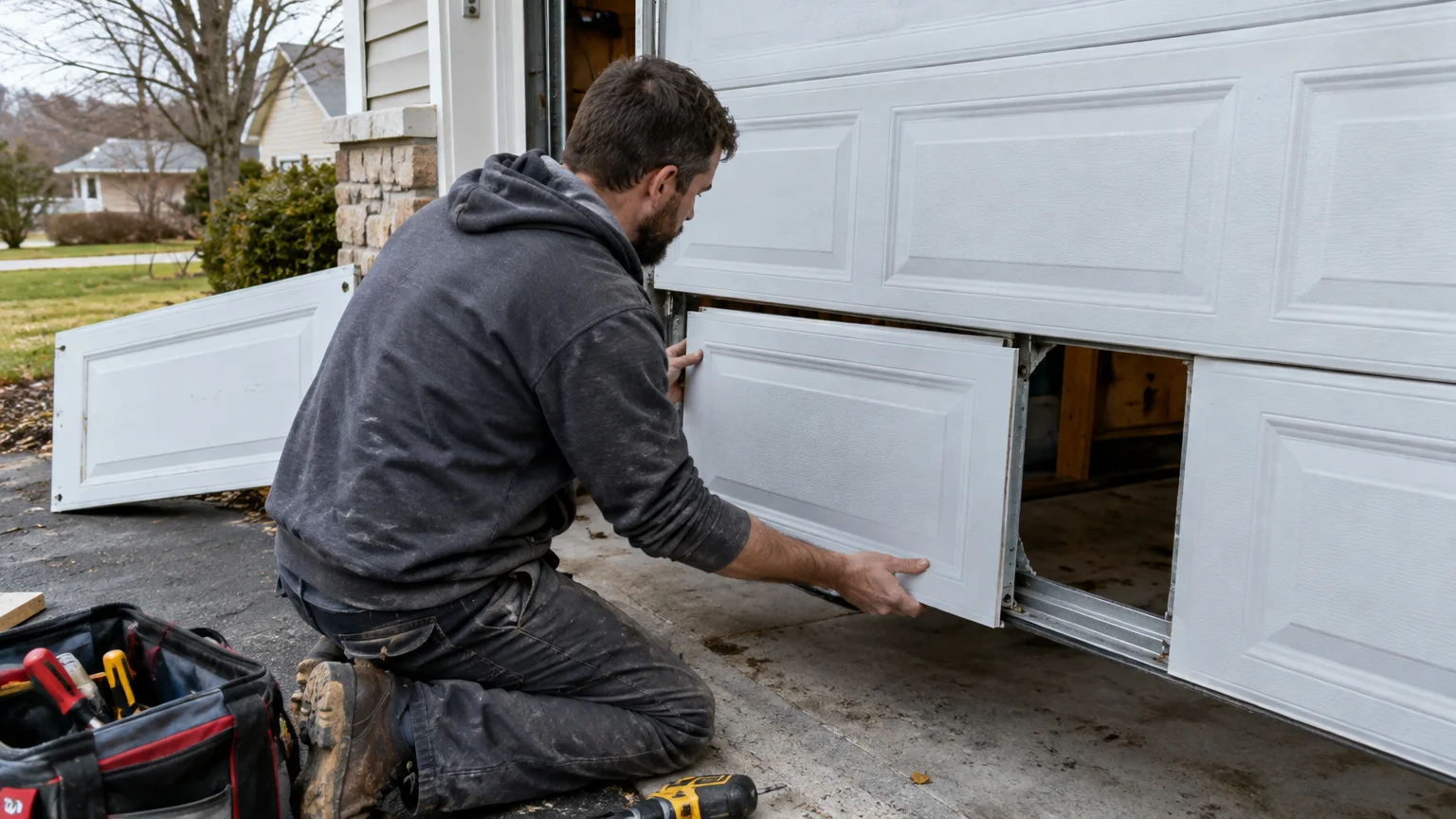
- Can you replace just one garage door panel?
- What types of garage door damage can be repaired?
- How does matching a replacement panel affect the job?
- What factors drive the cost of replacing one garage door panel?
- When is replacing the entire garage door a better choice?
- Can a damaged garage door panel cause other problems?
- How can you decide whether to replace one panel or the whole door?
- Frequently Asked Questions
Can you replace just one garage door panel?
Yes, you can often replace one garage door panel when the rest of the door is in good shape. This may work after a car hit, storm damage, or a deep dent. The new panel must match the door brand, style, size, and build. A poor match can affect balance, movement, and the way the door looks.
When panel-only replacement is usually practical
Replacing only one panel is often practical when the damage stays in one section. The tracks should still be straight. The hinges, rollers, cables, and springs should also work as they should. The door should open and close without twisting or pulling to one side.
A technician may check the whole door before making a choice. A panel can hide damage to the frame or lifting system. Hermitage Garage Door Repair helps property owners understand whether one panel, related hardware, or a full door makes sense for the door’s condition and safety.
When damage affects more than the visible section
A hard hit may bend a vertical track, loosen hinges, or pull on the cables. The panel you can see may not be the only damaged part. A door that looks ready for repair may still be unsafe if its weight is no longer supported correctly.
Do not force a damaged door by hand or with the opener. If it is crooked, stuck, or hanging on one side, keep it closed until someone checks it. Garage Door Off Track Repair may be needed before you decide whether to replace the garage door panel.
What types of garage door damage can be repaired?
Small dents, light bends, and some damaged hardware may be repaired. Large cracks, deep folds, and broken panel frames often need panel replacement. The safe choice depends on whether the panel can keep its shape and help support the door as it moves.
Dents, cracks, bends, and damaged hardware
A small dent may not affect how the door works. In some cases, a technician can repair the panel instead of replacing it. A sharp bend can change the panel shape and make the rollers rub against the tracks.
Cracks and splits are more serious when they reach a hinge or panel edge. These areas connect the sections and help spread the door’s weight. Damaged hinges, rollers, and brackets may also need work before the door can move safely.
A homeowner can clear dirt from the tracks and look for loose hardware that is easy to see. Do not remove spring parts, cables, or bottom brackets. These parts can hold strong force and may cause severe harm without the right tools and training.
When a panel replacement is safer than a repair
Replacement is often safer when a panel no longer holds its shape. A weak section can flex each time the door moves. This repeated movement may add stress to the hinges, rollers, and opener.
A new panel that matches the door may restore its shape and help it move evenly. Repair may not work well on older panels, especially when the original design is no longer made. Garage Door Spring Repair or Garage Door Cable Repair may also be needed if the impact harmed the lifting system.
How does matching a replacement panel affect the job?
A replacement panel must match more than the opening width. Its height, thickness, shape, hinges, windows, insulation, and finish all matter. The wrong panel may leave gaps, add the wrong weight, or stop the door from sealing well.
Door brand, model, size, and panel design
The brand and model can help identify the correct replacement part. Older doors may have a label or model details on an inside surface. If that information is gone, a technician may compare the panel shape and hardware instead.
The panel height and width must fit the other sections. The connection points must also line up with the hinges and rollers. Even a small mismatch can cause rubbing, noise, or uneven movement. Confirm the replacement panel before ordering it.
A local check can show whether someone changed the door before. Hermitage Garage Door Repair serves the main Hermitage area, including Hann Hill and New Virginia, along with Sharon, Hubbard, Mercer, Greenville, and nearby communities. A full check is safer than judging the visible damage alone.
Color, windows, insulation, and finish considerations
A new section may not look exactly like older panels. Sun can fade the existing finish over time. Paint color, surface texture, and window style may also change between production runs.
Insulated doors need a panel with similar construction. A lighter or heavier section can change the door’s balance. Window inserts should match the layout and frame style when a consistent look matters.
When an exact match cannot be found, compare a close replacement with a complete new door. The best choice depends on the door’s age, appearance, safety, and future repair needs.
What factors drive the cost of replacing one garage door panel?
The final cost depends on the panel, its fit, labor, access, and any related damage. One panel is usually a smaller repair than replacing a complete door. A hard match or hidden damage can make the work more involved. The final cost is confirmed on a quote after the door is inspected.
Materials, compatibility, and availability
The panel material affects the work. Steel, aluminum, wood, and composite panels have different weights and finishes. Insulation and windows add more details that must match the current door.
Availability also matters. A common modern panel may be easier to find than a section from an old or discontinued door. A custom match may need more planning than a standard replacement. Ask whether the proposed panel matches the door’s weight and design.
A panel that looks close but does not balance correctly may lead to more repairs later. A safe recommendation considers both the visible finish and the way the door works.
Labor, access, removal, and disposal requirements
The job may involve securing the door, removing connected sections, fitting the new panel, and checking the lifting system. A tight garage, limited access, or damage near the tracks can make the work harder.
Removal and disposal may also matter when the damaged section is heavy or unstable. After fitting the panel, the technician may check the rollers, hinges, cables, springs, and opener. Garage Door Opener Repair could be needed if the impact also harmed the automatic opening system.
Urgent help may be needed when the door blocks a vehicle or leaves the garage open. The quote should explain the recommended work and the factors that shape the final cost.
When is replacing the entire garage door a better choice?
A full replacement may make more sense when the door is old, has repeated damage, or needs several major parts. It may also be best when a matching panel is not available. The goal is to provide a safe, reliable door for years, not just repair one section.
Age, repeated damage, and outdated components
One damaged panel may be easy to spot, but an older door can have wear in many places. Hinges may be loose, rollers may be loud, and seals may be brittle. Replacing one section will not fix these wider problems.
Repeated repairs can show that the door is near the end of its useful life. A full replacement can reduce the need to match old parts and bring the hardware into one system. Garage Door Installation may be the better choice when the current door has broad wear.
A technician should explain why a full replacement is being considered. Ask which parts are damaged, which are worn, and whether one panel would still move safely.
Energy efficiency, security, and appearance
A newer door may have better insulation and a tighter garage door seal. This can help limit drafts through the garage and improve comfort in nearby rooms. A strong door can also support home security by closing firmly and resisting forced movement.
Looks matter too. One new panel may stand out beside faded sections. A full replacement gives the door one finish, window layout, and surface design. This can matter when a property owner plans to sell or improve the front of the home.
The best choice depends on the property, safety needs, budget, and condition of the current door. A complete replacement is not always needed, but consider it when several problems appear together.
Can a damaged garage door panel cause other problems?
Yes, a damaged panel can affect how the whole door moves. A bent section may pull on hinges, strain rollers, or make the door sit unevenly. Continued use can turn a small repair into a wider garage door safety problem.
Effects on tracks, rollers, hinges, and springs
Garage door sections move together as one system. If one panel bends, rollers may rub or leave the track. Hinges can twist, and the door may place uneven force on cables and springs.
The opener can also struggle when the door becomes heavier or harder to lift. A motor that keeps working against extra resistance may wear faster. Do not treat loud operation or slow movement as normal after an impact.
Cleaning visible dirt from the tracks is usually safe. Testing balance, removing spring parts, or adjusting cables is not safe for most homeowners. Torsion springs, extension springs, lift cables, and bottom brackets can release stored force without warning.
Warning signs that the door should remain closed
Keep a damaged door closed when it is crooked, partly off the tracks, or unable to rest evenly. Other warning signs include a loose cable, a hanging panel, broken glass, or a loud snap during movement.
Do not use the opener to force the door through resistance. Keep people and vehicles away from the area and arrange professional help. Emergency Garage Door Repair may be needed when the door cannot secure the garage or blocks safe access.
How can you decide whether to replace one panel or the whole door?
The decision should come from a full safety check, not the panel’s appearance alone. The technician should inspect the door structure, lifting parts, opener, tracks, seals, and available replacement parts. The recommendation should explain the immediate repair and likely future concerns.
Questions to ask during an inspection
Ask whether the panel is still made and whether the replacement will match the current sections. Also ask if the impact damaged the tracks, hinges, rollers, cables, springs, or opener.
Useful questions include:
- Is the door safe to use right now?
- Can one panel match the current size, weight, windows, and finish?
- Are other parts worn or bent beyond normal use?
- Would the repaired door still seal and balance correctly?
- Would a full replacement solve several problems at once?
These questions help you understand the recommendation. They are better than relying on a quick look at the damaged panel.
What to expect from a repair or replacement recommendation
A clear recommendation should list the damaged parts and explain why repair, panel replacement, or a new door is suitable. It should also explain safety limits, such as keeping the door closed until work is finished.
Hermitage Garage Door Repair can assess garage door problems for homeowners, business owners, and property owners and nearby areas. The right choice may be one panel, related hardware, or a complete door. In Hermitage, the final quote should make the recommended work clear before it begins.
Key Takeaways
- One garage door panel can often be replaced when the rest of the door is sound.
- The replacement must match the brand, size, design, weight, and features.
- Hidden damage to tracks, hinges, cables, springs, or the opener can change the choice.
- A full replacement may suit an older door with repeated damage or outdated parts.
- Spring and cable work should be left to trained professionals with proper tools.
Frequently Asked Questions
Can a homeowner replace a garage door panel?
A homeowner can safely inspect the door, clear loose dirt from visible tracks, and note changes in operation. Panel replacement is usually best left to a trained technician because it may involve heavy sections and parts under force. Springs, cables, and bottom brackets should never be handled as a do-it-yourself repair.
How do you repair a damaged garage door panel?
The repair starts with an inspection of the panel and the full door system. A small dent may be repairable, while a bent or cracked section may need replacement. The technician must also check the hinges, rollers, tracks, cables, springs, and opener before returning the door to service.
How do you change garage door panels?
Changing a panel involves supporting the door, separating connected sections, fitting the new panel, and checking the full lifting system. These tasks can expose a person to heavy moving parts and stored spring force. A homeowner should not follow a step-by-step method for this work without proper training and equipment.
Is it better to replace one panel or the whole garage door?
One panel may be best when the door is fairly sound and an exact match is available. A full door may be better when the door is old, has repeated damage, or needs several major parts. The choice should follow a complete inspection and a quote that explains the recommended work.
What should happen if a panel is off track?
Keep the door closed, and keep people away from the damaged area. Using the opener can worsen the damage or pull on the cables and springs. Garage Door Off Track Repair may be needed before a panel can be replaced. A technician can check whether the tracks and lifting parts remain safe.
If you are unsure what happened, have the door checked before the problem grows. Contact us today to arrange an urgent inspection with Hermitage Garage Door Repair.