A safe answer to how to change garage door roller parts depends on where the roller sits and what is nearby. An upper roller may suit careful DIY work when the door is stable. Bottom rollers, cables, springs, hinges, and off-track doors can cause serious harm. A trained team can check the whole door before replacing parts.
Table of Contents
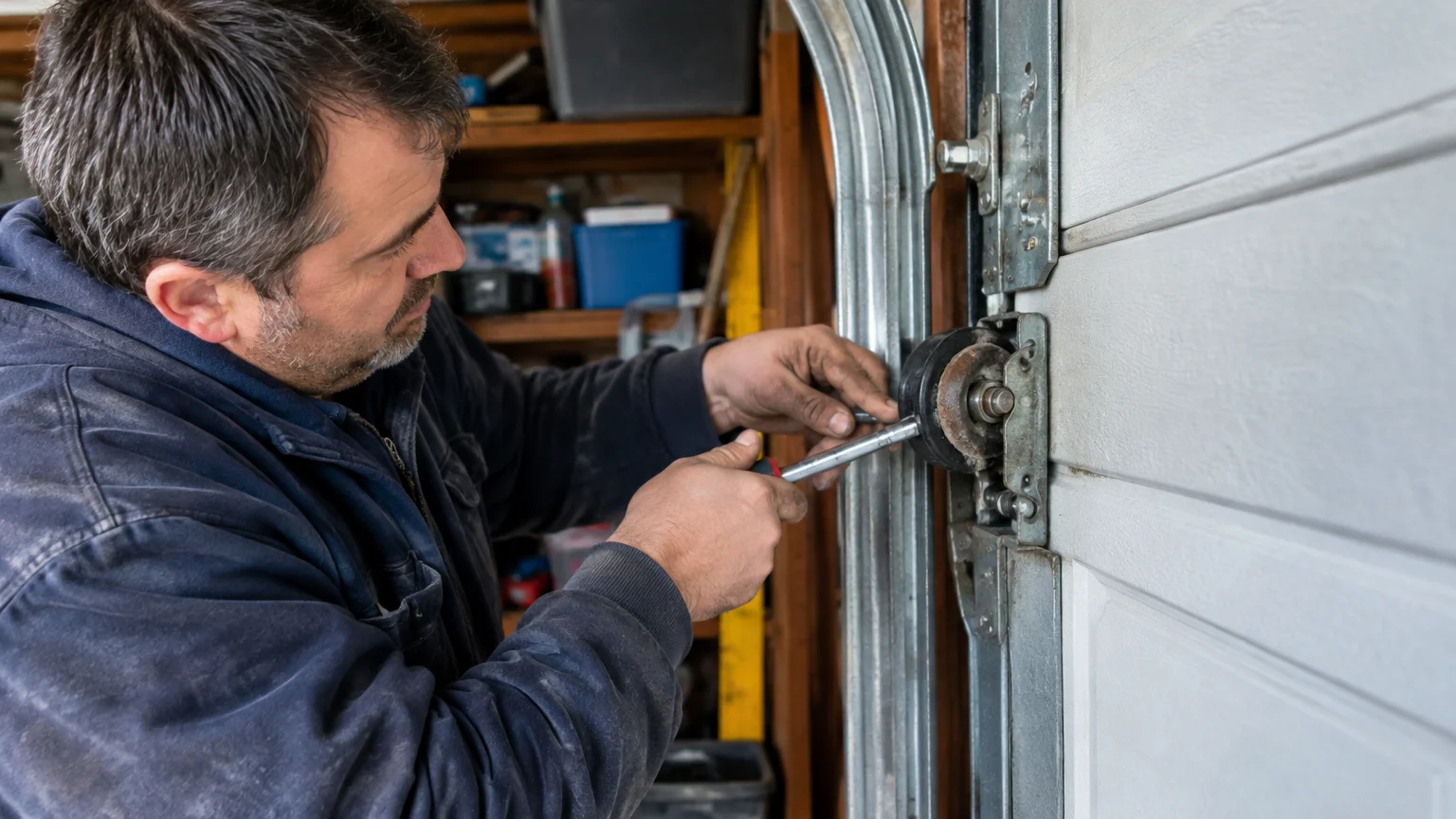
- How do you know when a garage door roller needs changing?
- What causes garage door rollers to wear out?
- Can you change a garage door roller yourself?
- How do you change a garage door roller safely?
- What is the difference between nylon and steel garage door rollers?
- What should you check when a garage door roller comes off the track?
- When should you call a garage door repair professional?
How do you know when a garage door roller needs changing?
A garage door roller may need changing when the door rattles, grinds, sticks, or moves unevenly. Look for cracks, flat spots, loose bearings, or a bent stem. The door may still work, but use can put more strain on tracks, hinges, cables, and the opener.
Sounds and movement that point to worn rollers
A good roller moves through the track with little noise. A worn roller may squeak, rattle, grind, or pop at one point during travel. Several worn rollers can make the whole door sound rough.
Watch the door as it opens and closes. It should move in a smooth, steady way. Jerking, leaning, stopping, or shaking may point to roller trouble. Still, dirt, a bent track, a loose fastener, or a poor track position can cause similar signs.
You can look at each visible roller without touching springs or cables. A nylon wheel may split or wear along its edge. A steel wheel may rust or have rough bearings. A stem at an odd angle may show a damaged hinge or track.
How roller problems affect the door system
Rollers guide each door section through the track. When one roller drags, other parts must carry more load. This can affect hinges, track fasteners, lift cables, and the opener.
A noisy door is not always an emergency. A crooked, partly open, or off-track door needs more care. Stop using it until the cause is clear. Hermitage Garage Door Repair can help people check whether the trouble comes from a roller, hinge, track, or another part.
What causes garage door rollers to wear out?
Rollers wear from repeated use, dirt, moisture, poor alignment, and nearby damage. Finding the cause matters because a new wheel will not fix a bent track or broken hinge. A full check can help prevent the same problem from returning.
Age, dirt, moisture, and poor alignment
Each opening cycle moves the rollers along the track. Wheels and bearings can wear over time. Dirt can build up inside the track and add drag. Water can rust steel parts and harm some bearing surfaces.
The track does not need heavy grease. Grease can hold dust and make a rough paste. A homeowner can wipe away loose dirt from the track area. Keep hands away from moving parts.
Poor alignment is another common cause. A loose bracket, bent track, or shifted fastener can make a roller rub. A vehicle, lawn tool, or stored item can also hit the door. These problems need more than a new wheel.
How hinges, tracks, and door weight contribute
Hinges join the door sections and let them bend during travel. A cracked hinge can hold a roller at the wrong angle. This can cause uneven wear and make the door bind.
Door weight also matters. Solid, insulated, and commercial doors may use different roller sizes. The replacement must match the wheel size, stem length, hinge opening, and track setup. A part that looks close may not fit or carry the load safely.
Garage Door Maintenance can help find loose hardware, dirty tracks, damaged hinges, and poor movement early. Do not tighten hardware near springs or lift cables unless you understand the system. These parts can hold dangerous force.
Can you change a garage door roller yourself?
A careful homeowner may replace an accessible upper roller when the door is stable. The work must stay away from springs, cables, and bottom brackets. It is not safe for every door. The roller’s location matters more than how simple the part looks.
Which roller replacements may suit careful DIY work
An upper roller may be easier to reach when the door is closed and stable. First, check that the new part matches the old one. The wheel, stem, bearing, and hinge opening must fit the door.
Safe checks include watching the door move, clearing objects from the track, wiping away loose dirt, and looking for visible cracks. You can read the door and opener manuals, too. These steps help you learn about the problem without touching parts under tension.
Do not continue if the door is heavy, crooked, loose, stuck, or hard to control. Another person should not hold the door as a substitute for proper support. Improvised support can fail without warning.
Why removing rollers from the bottom section can be dangerous
Bottom rollers connect near bottom brackets. Those brackets may sit close to lift cables and spring force. A lift cable under tension can move sharply if a bracket shifts. This can seriously injure a hand, arm, or face.
A garage door spring is a tightly wound or stretched metal part that helps lift the door. Torsion and extension springs store energy. Spring work needs proper tools, training, and a repair plan. It is not a normal household project.
The same warning applies to a garage door hinge broken near the bottom section. That hinge may carry more load than it appears to hold. A professional can secure the door and replace the part without guessing.
How do you change a garage door roller safely?
The safe way to change garage door roller parts starts with finding the roller location and making sure the door is stable. It does not include releasing springs, removing bottom brackets, loosening lift cables, or forcing an off-track door. Stop if any of these parts are involved.
Tools, preparation, and door-position checks
Before safe upper-roller work, read the door maker’s instructions and compare the replacement. Basic hand tools may help, but the right tool depends on the hinge and fastener. Eye protection and gloves can help protect against dirt and sharp edges.
Clear the work area. Keep people, pets, and vehicles away from the door. Disconnect the opener as directed by its manual when needed. The door must remain in a stable position. If it cannot stay stable, it is not ready for DIY work.
Do not work near a spring, cable, bottom bracket, or loose track. Do not bend the track to force a roller into place. Do not remove fasteners that may support the door’s weight.
General replacement steps for accessible rollers
For an accessible roller that is confirmed safe, the general process is simple in concept but still needs care:
- Identify the matching part. Compare the wheel, stem, bearing, and hinge opening.
- Secure the work area. Keep the door stable and people away from moving sections.
- Remove only the approved fastener. Avoid hardware near springs, cables, or bottom brackets.
- Guide out the old roller. Never force it past a bent track or damaged hinge.
- Fit the new roller. Check that it sits correctly in the track and hinge.
- Test movement carefully. Stop if the door binds, leans, scrapes, or sounds different.
These steps are general guidance, not a spring or cable repair method. A failed test means the door needs a professional check. Garage Door Off Track Repair is safer when the roller will not sit correctly or the track has moved.
What is the difference between nylon and steel garage door rollers?
Nylon rollers usually make less noise and do not rust like steel wheels. Steel rollers can suit demanding use, but they may carry more sound and need checks for rust and bearing wear. The best choice depends on the door, track, use, and correct fit.
Noise, durability, and maintenance requirements
Nylon rollers are often chosen for homes because they can make travel quieter. Some have sealed bearings that need less routine care. They can still crack, wear, or change shape when the door is heavy or nearby hardware is damaged.
Steel rollers are strong and common on doors that see frequent use. They can work well when the track is straight and the bearings stay in good shape. Rust, dry bearings, and rough edges can make them noisy and add drag.
Neither material fixes a bad track or broken hinge. A new roller may wear quickly when the door is out of line. Choose a wheel that matches the full door system, not just the material.
How to choose rollers for a home or business
A home garage may need quiet movement. A business or rental property with frequent use may need a stronger roller and regular service. Door weight, opening cycles, weather, and track condition all matter.
A technician can check the full roller set instead of changing only the loudest wheel. Matching rollers may help the door move more evenly. If the opener struggles, the trouble may also involve balance, hinges, springs, or track resistance.
Garage Door Opener Repair may help when the opener clicks, stops, reverses, or cannot lift a door that moves well by hand. Opener and roller trouble can happen together, so both systems should be checked.
What should you check when a garage door roller comes off the track?
When a garage door roller comes off the track, stop using the door and keep people away. The cause may be a bent track, loose hinge, broken stem, damaged cable, or impact. Forcing the door can make the damage worse and may cause it to fall.
Common reasons a roller leaves the track
A roller may leave the track after an impact or when a track bracket becomes loose. A worn hinge can change its angle. A broken cable can let one side drop. A damaged roller may also break or slip from its hinge.
Look from a safe distance. Note whether the door leans, a cable hangs loose, or the track has a sharp bend. Do not push the door up or pull it down. Do not place fingers between door sections.
The track should guide rollers without pinching them. Do not bend it by hand. A loose track may also be under load, so avoid removing bolts without proper support.
When an off-track door needs professional repair
An off-track door needs professional help when it is heavy, crooked, stuck, partly open, or connected to a loose cable. The same applies when a spring, bottom bracket, hinge, or track support appears damaged. These parts can shift as soon as the door moves.
Garage Door Cable Repair may be needed when a cable slips or breaks. Garage Door Off Track Repair may be needed when rollers and tracks no longer line up. A trained technician can secure the door before correcting the cause.
Hermitage Garage Door Repair can assess a door that will not close, will not open, or leaves a vehicle trapped inside. Until help arrives, keep the area clear. Do not test the opener. A powered opener can pull against a damaged door and create more damage.
When should you call a garage door repair professional?
Call a professional when a roller problem involves springs, cables, bottom brackets, heavy door sections, bent tracks, or an off-track door. Prompt help can restore safe access and protect a home or business from an unsecured opening.
Warning signs that make DIY replacement unsafe
The following signs mean the door should not be repaired by trial and error:
- A lift cable is loose, broken, or wrapped unevenly.
- A spring is broken, stretched, separated, or visibly damaged.
- The bottom bracket or lower hinge is cracked or loose.
- The door is crooked, stuck, or partly off the track.
- A track is bent, pulled from its support, or badly rusted.
- The opener strains, reverses, or runs while the door cannot move.
A professional can also help when you cannot identify the right roller. Replacing a matching set may work better than fitting one different wheel. The repair plan depends on the door design and damage found during the check.
How prompt roller and track repair protects access and security
A working garage door helps protect vehicles, tools, stored items, and entry points. A door that stays open or will not lock may leave a home or business exposed. Waiting can turn a small roller issue into track, hinge, cable, or opener damage.
Quick action can reduce trouble for tenants, workers, and homeowners. It can restore normal entry without unsafe lifting or forcing. Hermitage Garage Door Repair serves the main Hermitage area, including Hann Hill and New Virginia, as well as Sharon, Hubbard, Mercer, Greenville, and nearby communities. The team can explain whether the next step is roller replacement, Garage Door Maintenance, or urgent repair.
Key takeaways
- Worn rollers can cause noise, cracks, rough movement, and uneven travel.
- Nylon is often quieter, while steel may suit demanding use.
- Bottom rollers, springs, cables, and brackets are not safe DIY work.
- An off-track door should stay still until the cause is checked.
- A full inspection can help protect the track, opener, hinges, and door.
Frequently Asked Questions
Can a homeowner change a garage door roller?
A homeowner may replace an accessible upper roller when the door is stable and the work stays away from springs, cables, and bottom brackets. Bottom rollers and damaged hinges need professional care. If the door is crooked, heavy, stuck, or off track, stop and arrange an inspection.
How often should garage door rollers be replaced?
There is no one replacement schedule for every door. Rollers wear at different rates based on use, dirt, moisture, door weight, and track alignment. Check them when the door becomes noisy, jerky, or uneven. A technician can decide whether one roller or several need replacement.
Are nylon garage door rollers better than steel?
Nylon rollers are often quieter and may suit many homes. Steel rollers can work well on doors with frequent use or higher demands. Neither option is right for every system. The wheel must match the door, hinge, track, load, and bearing design.
What should someone do when a garage door roller comes off?
Stop using the door and keep people away from it. Do not push, pull, bend the track, or run the opener. A loose cable, damaged hinge, bent track, or heavy door can create a serious hazard. Professional Garage Door Off Track Repair can address the cause safely.
Does a noisy roller always need replacement?
No. Noise can come from dirt, a bent track, a loose hinge, dry bearings, or another damaged part. A roller may need replacement when it has cracks, flat spots, rust, rough bearings, or poor movement. Check the whole door system before choosing a part.
Conclusion
Learning how to change garage door roller parts can help a homeowner understand warning signs. It does not make every repair safe. Accessible rollers may suit careful work, while rollers near springs, cables, bottom brackets, or off-track sections need trained attention. Keep the door still in Hermitage until it is checked. Contact us today to arrange urgent help from Hermitage Garage Door Repair.