Garage Door Maintenance in Hermitage, PA
A tune-up looks over every part that carries load or moves, resets whatever has drifted, oils what needs oil, and points out parts that are wearing thin well before they fail.
Census figures put the median Hermitage home at a 1970 build, so plenty of garage doors here have decades of cycles behind them. Catching a worn spring or frayed cable early keeps the repair on your schedule.
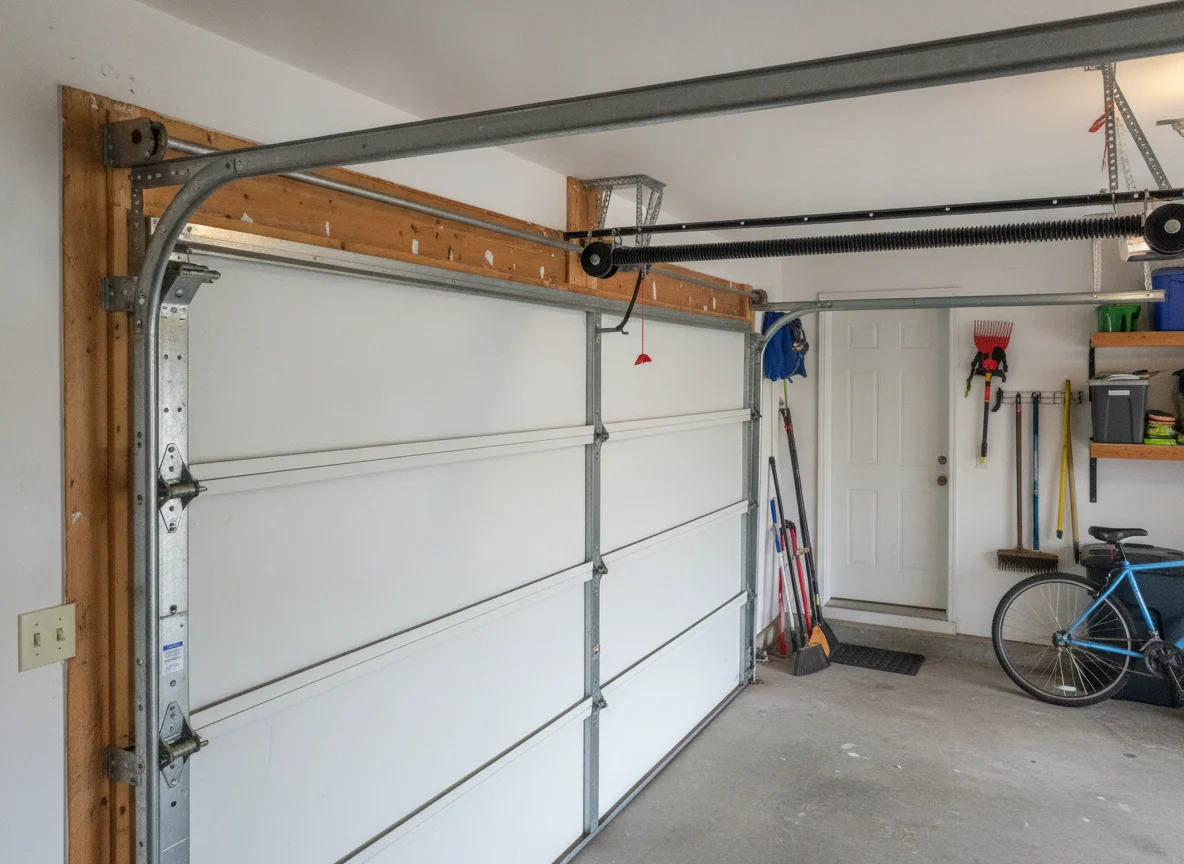
What gets inspected
Coil springs
Look for gaps in the coils, rust and uneven wear, then test whether the door balances.
Lift cables
Examined for broken strands and corrosion at the bottom brackets, with tension compared left against right.
Hinges and wheels
Cracked or wobbly rollers are flagged; hinges and bearings get lubricated.
Tracks
Scanned for bends and loose brackets, wiped down, and checked for line.
Hardware bolts
Bolts on the hinges, brackets and track get snugged, since daily cycling rattles them loose.
Opener settings
Belt or chain slack, travel limits and closing force are set again.
Auto-reverse test
Opener rules from 1993 on call for an eye, edge sensor or hold button; the door must reverse.
Door seals along the bottom and sides, inspected for openings that admit rain, drafts and mice.
The aim is to leave you knowing which parts are worn and how fast, so the decision to act now or wait is yours.
A louder, jerkier or slower door is worth a message. Say what changed and when you first noticed.
Contact UsSigns a check is due
It has become louder, with grinding, squeals or a bang when it reaches the top or bottom.
Travel is jerky, or slows midway.
It slams down hard, or lands on one side before the other.
The motor strains and labors far more than it did before.
Nobody recalls the last inspection, yet it runs every day of the week.
Describe how the door behaves
Two sentences are plenty for a first message, and you needn't know what the broken part is called.
Owner checks in between
Five minutes of looking now and then spots trouble early:
Glance at the springs and cables monthly, standing on the floor with the door shut. Spot a gap in a coil or a frayed strand, and leave both alone.
Try the auto-reverse
Lay a board flat under the door and close it onto the board; the door should back up. The U.S. Consumer Product Safety Commission advises monthly tests. If it fails, stop using the opener.
Check the eye
Pass a broom handle through the beam mid-close; the door ought to halt and rise again.
Lubricate the right places
Use a spray made for garage doors on hinges, roller bearings and springs. Leave the tracks clean and dry, and skip heavy grease because it holds onto grit.
Keep tracks and the floor beneath the door free of clutter. In freezing weather, clear ice so the bottom seal doesn't bond to the slab; forcing a frozen door with the opener can rip the seal and overload the motor.
Ideal frequency
Use decides the answer. A door that serves as the family's everyday entrance, cycling many times daily, needs more attention than one used now and then. About 63% of Hermitage homes predate 1980, so older doors with worn hardware are common here, and a check ahead of the first hard freeze is sensible.
Yearly suits the typical household, shifting up or down with how often the door runs.
What shapes maintenance cost
Door width, single-car or double, and whether an opener is serviced too.
Worn parts discovered along the way, such as rollers, a seal, hinges or an aging cable. Ask that replacements be itemized apart from the service itself so you can approve each one.
How much the settings have wandered over time
Years of neglect mean more work to put right than a door looked at on a regular basis.
When servicing is not enough
Servicing suits a door that still runs. Once a part has failed, the matching repair page is the better start:
Quick answers
Should a recent door still be serviced?
Yes, when it gets heavy use. Wear on springs and rollers follows the number of openings rather than the calendar, so a busy young door can age quickly.
Is there any way to stop a spring snapping?
No service makes a spring permanent. A check can reveal a coil that is close to failing, which lets you swap it at your convenience rather than after it breaks.
Is any lubricant off limits?
A lithium or silicone spray sold for garage doors. Avoid household oil, which attracts dust, and thick grease.
More garage door work
Garage Door Spring Repair
Snapped torsion and extension springs swapped for ones rated to the weight of your door.
Read more →Garage Door Cable Repair
Frayed, snapped or slack lift cables, and a door that hangs crooked.
Read more →Garage Door Opener Repair
Openers that buzz, back up or stay silent, plus a new unit when repair stops making sense.
Read more →Send a message
Mention the age of the door and opener, about how many times a day it runs, and any new behavior, whether that is a noise, a jolt or a sluggish close.
If the door came with a house you just bought, say that too, along with anything the previous owner told you.